Hopeful flower
Image


There’s a new report about seven no-log-policy VPN providers that have collected very personal information of users, including but not limited to website addresses, user email for registration on websites, passwords, apps, files accessed, mobile operator (if a cellphone user), phone number, hometown city, etc.
It’s a really worrying news about VPNs. What’s more worrying is that they somehow managed to get the full path of the address the user visited which should be technically impossible.
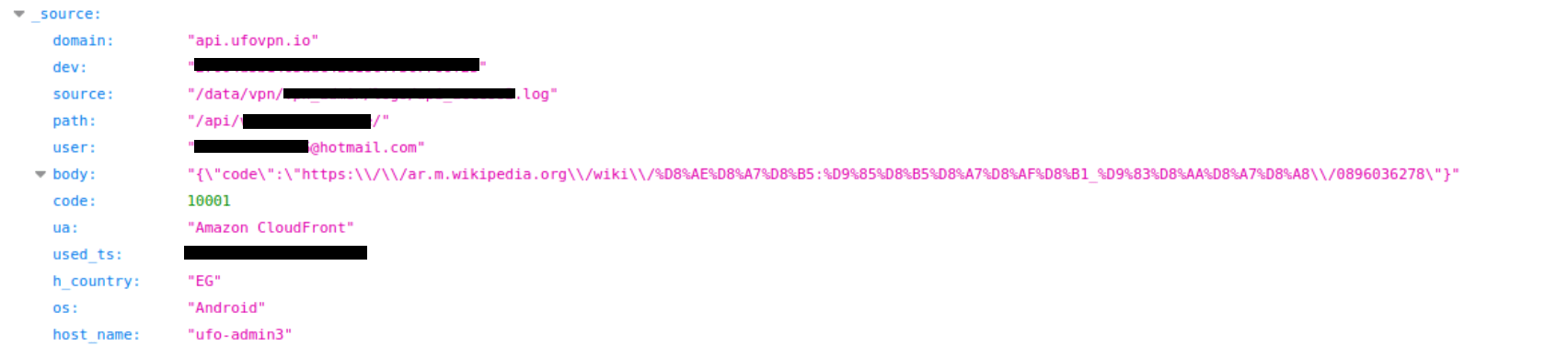
This can be a new era in online privacy for people. VPNs advertise about privacy and encryption a lot and this can disprove them and make privacy activists/advocates worry about new technical capabilities for online privacy violation and invading.
Continue readingI’ve always said that a community may have a leader, but it’ll never have a single owner. A community will always belong to its members. Now, how a person joins a community is a different story. For example, when we talk about the medical community, we’re not talking about every single person who ever received medical treatments; we’re talking about people who contributed to the medical stuff.
No matter you’re a doctor, nurse, hospital manager, a pharmacy employee/employer, or anyone who serves the medical system, you’re part of the medical community. Many people are getting affected by this community but we all know that not anyone who’s affected is part of this community.
Same thing goes for free software community. No matter what part of the community or which software/thing you contributed to, you’re part of the community. Now, our community may get affected by some people more than others. For example, Mr. Stallman has a serious power over a lot of people. Or GNU project can affect a lot of decisions made by other projects.
My personal opinion, however, is a little different. I accept every user of any free software as a member of the community. Now, with this said, let’s talk about how I think about making decisions in a community.
Continue readingMany major websites and services were unreachable for a period Friday afternoon due to issues at Cloudflare’s 1.1.1.1 DNS service. The outage seems to have started at about 2:15 Pacific time and lasted for about 25 minutes before connections began to be restored. Google DNS may also have been affected.
Cloudflare at 2:46 says “the issue has been identified and a fix is being implemented.” CEO Matthew Prince explains that it all came down to a bad router in Atlanta:
We had an issue that impacted some portions of the @Cloudflare network. It appears that a router in Atlanta had an error that caused bad routes across our backbone. That resulted in misrouted traffic to PoPs that connect to our backbone. 1/2
Matthew Prince
The company also issued a statement via email emphasizing that this was not an attack on the system.
Now, many people are talking about how we need decentralization on the internet to avoid such problems/incidents. People are complaining about centralization and how federation will improve things.
Until we start trying to understand why a thing is centralized, a federated alternative is doomed to fail even more catastrophically. Usually, a centralized thing is because money, security, convenience, reliability, and Metcalfe’s law.
With current federation system, we still miss some benefits and also there are some problems we should pay attention to. For example, a centralized system can have dedicated attention about security but a decentralized/federated system is more vulnerable as it works like a chain.
If one of the links in the chain breaks, the whole chain breaks. Also, a decentralized system doesn’t mean that data is stored in the air. Data is still stored in computers. I’m not saying decentralization is not a good thing, what I’m saying is that we should first write protocols and test it in various ways to be sure decentralization doesn’t affect our security and privacy, and it improves our experience.
With current systems, I can’t see a good point in decentralizing our networks except for certain matters such as social media.
Australia may consider modifying its law that authorizes secretly menacing any software developer in the world with punishment for refusing to insert a backdoor on Australia’s command. The decision not to menace employees individually would remove one of the many menacing aspects of this law.
Nonetheless every free software contributor would still be a target.
For this reason, I urge all free software developers to stay away from Australia.
A country willing to prosecute a whistleblower secretly and conceal his name cannot be trusted to follow any norms of decency.
Digital Rights Management or DRM is the act of imposing technical constraints that control what users can do with digital media. When you are prevented by a piece of software from copying or playing a song, reading an e-book on another device, or playing a solitaire game without Internet access, you are actually restricted by DRM.
This helps big tech and DRM abusers to gain more power over users. DRM abusers can control people’s behavior and every device that is created to run their software.
Proponents of freedom of expression and human rights, therefore, call DRM not “digital rights management” but “Digital Restrictions Management”. We should say that if we want to avoid a future in which our tools are to monitor our interactions. With digital media, we have to fight not to lose control of our media and software.
Continue readingIn 1983, Richard Stallman, longtime member of the hacker community at the MIT Artificial Intelligence Laboratory, announced the GNU project, saying that he had become frustrated with the effects of the change in culture of the computer industry and its users.
Software development for the GNU operating system began in January 1984, and the Free Software Foundation (FSF) was founded in October 1985. An article outlining the project and its goals was published in March 1985 titled the GNU Manifesto. The manifesto included significant explanation of the GNU philosophy, Free Software Definition and “copyleft” ideas.
Some parts of the GNU Manifesto begun as an announcement of the GNU Project posted by Richard Stallman on September 27, 1983 in form of an email on Usenet newsgroups.
The project’s aim was to give computer users freedom and control over their computers by collaboratively developing and providing software that is based on Stallman’s idea of software freedom (although the written definition had not existed until February 1986). The manifesto was written as a way to familiarize more people with these concepts, and to find more support in form of work, money, programs and hardware.
The whole point and reason of the GNU Manifesto was to bring justice to computer users. Stallman believed that people should be in complete control of their own computers and it should us who control the computers not computers controlling us.
Most tech/computer companies are producing proprietary software and computers which violate our rights over technologies we use and we, as well as Mr. Stallman, believe this is injustice.
With this in our minds, I should say that free software cares about justice. However some people may use free software for reasons/purposes that we don’t like, the core of free software definition deeply cares for justice.
I see a lot of people in free software community who want to help the community by violating some people’s rights. Limiting people’s freedom of speech in communities or dismissing them is not what we truly believed in when it started.
I totally agree that if a person is trying to mislead people to proprietary stuff or violates the basic rules of a specific community, we should act against it but only because someone disagrees with us and/or doesn’t like the way we act about software freedom, we shouldn’t limit that person from participating or getting services.
Free software is about justice. Free software cares about justice.
There are new concerns about new famous video-sharing app TikTok and its privacy. TikTok, the video-sharing app whose meteoric rise amongst teenage users has made it a challenger to the likes of Facebook, is under attack thanks to its Chinese roots.
The Trump administration said this month it’s considering banning the app in the US altogether. Secretary of State Mike Pompeo first broke the news on Monday, telling Fox News’ Laura Ingraham the administration was considering a ban on national security grounds.
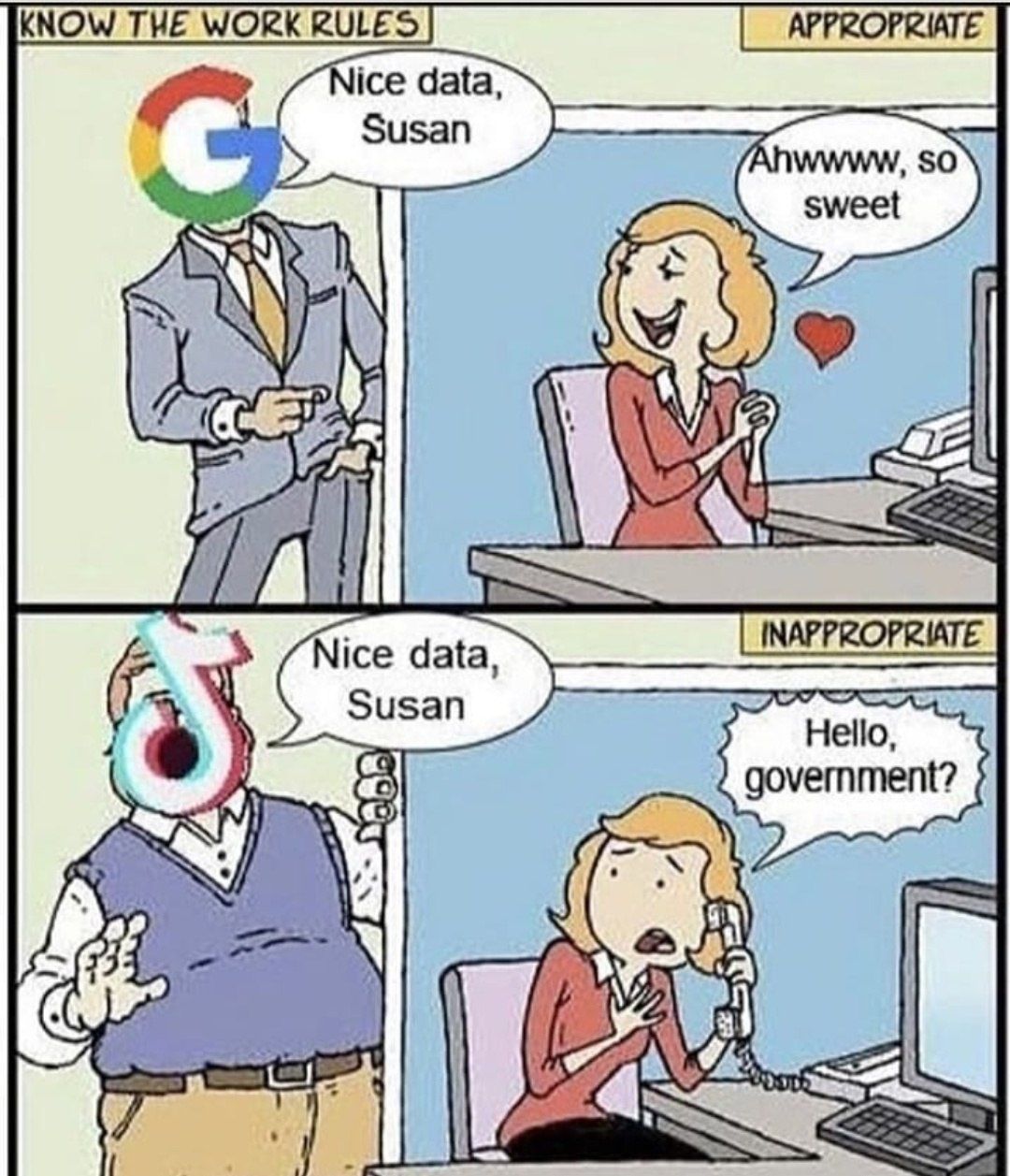
It’s actually funny that a lot of people are now considering deletion of the app for privacy reasons but they have no problem with Google, Facebook, Amazon, etc. for the same thing. It’s safe to say that TikTok has even less data of users than Big Tech.
Pompeo says that using TikTok could mean people’s data ends up “in the hands of the Chinese Communist Party.” It may be correct. I encourage you to uninstall this software too. Not only this app but every proprietary privacy-violating app you have.
But something I don’t understand is that how people can be concerned about a company because it has Chinese roots but be completely OK with another company that even collects and processes more data only because it’s American.
If TikTok collecting data is bad, Google harvesting data is worse. I believe United States officials are well aware of how Google and other American companies harvest people’s data. I’m also sure that U.S. Government has no problem with people’s privacy being violated.
New concerns and media attention to TikTok is just another political game between U.S. and China. Some political analysts believe putting a ban on TikTok is just to punish China for coronavirus.
Anyway, as I said, I totally encourage people to delete the app as much as I encourage people to move away from Google and any other privacy-violating proprietary software/company. It would be just ridicules if you are concerned about privacy of TikTok but not the same situation on Google, etc.