Privacy and data regulation

I’ve recently come across a lot of posts questioning data and privacy regulations. What is more common among them to describe privacy regulation as failed or worthless is that the dis-services we might use need that data to function.

That is far from truth. No flashlight app needs to access my contact list. No shopping site needs access to my microphone. No museum needs to know where I’m precisely located to show me a famous painting. Privacy regulation is exactly for that.

Privacy regulation is not there to make sites dysfunction, it’s there so the site won’t sell my personal information to data brokers. It’s there to make sure my privacy won’t be violated solely because I bought a new mobile phone.

My privacy is valuable to me and it should be protected. Regulation is there to protect my rights while also giving you a choice. You can consent to data collection and I can tell the dis-service to not to do so. It’s a choice, much like free speech.

I want my freedom of expression no matter what. Now I can choose to say something or be quiet but I want this right to be protected. Much like that, data should be regulated so you can choose to share it or not and also reverse the choice if you change your mind.

EU, no matter what some people might say, is the leading continent on protecting its people regarding data and privacy and I admire their work. It might not be complete, it might need a lot of work to be as good as it needs to be, but their work is nonetheless admirable.

Privacy and data should be protected, regulated, and violators should be punished. It’s the way it should be and I hope it’s the direction all countries take. We should force our lawmen to follow that route and we should help them with civil protests against violators of our privacy.

Specially now, that free (as in freedom) tech had a lot of progress and made it possible for people to experience same experiences and technologies without being forced to give away their personal information to giant corporations and data brokers.

Tech features

More I grow up, more I realize I choose my tech to fulfill my needs. not to use features the tech just gives me. I won’t suddenly feel a new need because an app or device has it. New technologies are often designed and made in a way to manipulate you into using them and I choose to resist that.

That is one reason I use free software. Free software is about freedom and that’s what gives me choice and lets me do my computing how I decide. Computer user freedom is about letting people decide how their computers and programs work and being able to change them to make sure it does what we ask them. Plus, we can distribute our copies (including copies of our modified programs) so we can help others as well.

It’s not that we always change or modify programs, I won’t change anything most of the times, but it’s about our rights. Think of software freedom in the way you think about freedom of speech. We may not have something to say but we certainly would like to have the freedom just in case.

Free software is the practical answer to our computing needs. It’s a right and it should be default way of computing. Computer user freedom makes sure that you’re in charge. It makes sure that the program won’t seduce you or create new needs, it just does what you ask it to do. It will satisfy your current needs, and nothing more. If you need a feature, it can be implemented in it, by anyone you decide. Most of the times the developers update programs so you won’t need to do anything but if the developer doesn’t upgrade or implement something, you can do it yourself or ask someone to do it for you.

Free software won’t manipulate you to do something, it won’t create new needs for you. If it does, you will have the ability and total power to modify it to stop doing that. Free software is all about empowering users over their computers and programs. It’s about putting you in control of what you own.

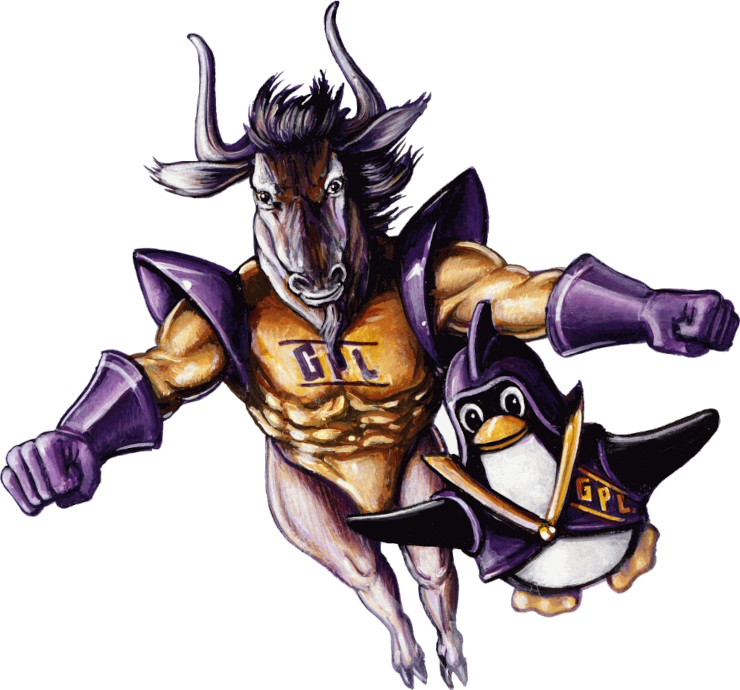
Free software is that superhero that won’t decide good and bad for you, it only puts you in power to decide for yourself. It’s that superhero that prevents the greater harm, which in this case is digital slavery, and puts you in charge of your own computing.

Make free software normal

Using computer programs such as VLC media player is very normal. Millions of people use it daily without ever thinking it’s a weird tool or player or even thinking what’s behind it. It’s one of the best media players we could ask for and is published under a GNU General Public License.

The quality of the media player is so high, people just install and use it. Unfortunately, the qualities and features of many other free (as in freedom) programs are not considered when people choose their software. Windows, the malicious freedom and privacy-violating operating system from Microsoft, is the dominant OS on personal computers and Android filled with proprietary programs and components is the dominant OS on mobile phones.

The quality of GNU operating system with Linux kernel is very high. The features, the freedom, the usability, the community, and many other factors to consider are all voting that GNU should be the normal operating system when people try to choose. However, the publicity of Microsoft and the resources, power, and tools it has made it the dominant OS.

Even though Microsoft violates users’ privacy and freedom everyday, in bright daylight, it is still one of the main two default choices people consider, along with other proprietary malicious operating system published by Apple.

It is like this because people consider it the normal. No matter how wrong it is, people choose it because it’s the normal way of computing for people. We, the free software community, should change that.

We should change the normal way of computing by educating people that using a computer should not be equal to losing your privacy. We should teach people that using a computer is not equal to losing your freedom. We should teach them that a computer should do as the user wishes, not vice versa. It is the computer that should be under the person’s command, and it should be the normal.

The normal should be:

  1. Users can run programs as they wish, for any purpose.
  2. Users are free to study how the programs work, and be able to change it so it does what the user wants.
  3. Users be free to redistribute copies of the program.
  4. Users be free to redistribute the copies of their modified versions.

And it is what computer user freedom means. It is what should be the normal for people. It is not only about the GNU operating system (or as many may may call it, Linux — which is a kernel), it’s every piece of program a computer user runs. Freedom is not conditional is situational. One should always be free from proprietary software.

It’s like free speech. It’s not that we always have something to say, it’s that we always should be free to speak. Computer user freedom, or software freedom, is not about always changing everything, it’s about having the right and power to change what we believe is wrong or is not suitable for us.

Computer user freedom is not the normal we have today. Running GNU+Linux on your computer is still odd for many people, and we should change that. People already use a lot of free (as in freedom) programs daily. VLC media player is one of them. Many proprietary programs use free components.

And it’s not like you have to be a computer expert to be able to use a free operating system or program, believe me, I know so many people who use them daily with no problem and they’re not even a computer power user.

We should change the normal. It shouldn’t be normal to sacrifice your privacy and freedom to be able to use your computer and we can achieve the new normal, the correct, humane, people-focused, and right normal through education, good publicity, hard work on usability and user experience (UX), and consistent work on improving our user interfaces and adopting them for daily users.

It’s never late to start, specially for a good purpose like our mission.

Too much personal information online

One thing that bothered me, regarding some bloggers I follow, is that people are sharing too much personal information online. I understand that this may be a personal matter and I have no right or power to control what is being published by others or how they choose to respect their own privacy, yet it bothered me.

I don’t know if they do this knowingly but some people share too much of their personal information. I do it too. My recent post about watching Godzilla movies is an example of unnecessary personal information on internet.

Why do we do it? I think because it’s fun and we have an urge to socialize through tools we have. I don’t use social networks and I feel I satisfy my need of socialization with posting such personal data in hope of forming connection to other people. I don’t know how correct that is.

Anyway, that feels unhealthy. As one who cares about privacy, I find it very upsetting that we voluntarily share such information. However, this is a personal blog, the blogs I read are also mostly personal. Everything we do and everything we say is personal so isn’t every post somehow sharing personal information?

Isn’t every service we sign up for, every mailing list we join, every blog we subscribe to, every video we watch and every message we send a piece of our personal information and data we share with others?

Internet is not safe and I understand this a bit more and better every and each day. If we’re connected to internet, at least a bit of our personal data is being shared with others whether we like it or not. I was thinking that some people are careless about what they share online on their personal blogs and homes, then I realized I do it as well, and came to understanding that we all do it no matter how much we care.

We share our information because internet is built that way. It starts when we connect to internet and share our IP and some other information with ISPs and ends when we enter our identifier into a form to get something in return.

So maybe writing about what I watch online or what that random guy wears or where were we last Sunday is the least of our worry and we should focus on broader and wider violation of our privacy both online and offline. At least what we write on our blogs are voluntary sharing of information, and not done by some mega corporation to make benefit upon our personal lives.

To do that, of course, we should start using free software and privacy-focused services. We should avoid proprietary programs, which they almost always spy on us, and change our privacy practices. We should start respecting ourselves more, and start to understand that our data is valuable, enough that corporations are willing to pay billions of dollars to get it.

I thought I share too much personal information online, but that’s not the case. My privacy gets more violated by those who collect my personal information without my real consent. They are willing to pay billions of dollars in fines rather than to stop it (example, example, example, example), that’s how valuable our data is.

We should stop this. Governments won’t do enough, as they benefit from these privacy violations, so the real change will be done by people. It’s people, and those who care enough to change, that will change how we’re treated. Nobody cares enough about online privacy except us, who are victims of violations.

If Mark Zuckerberg, who is one of biggest violators of people’s privacy, cares so much that he refuses to share his own personal data, we should refuse it too. If privacy is so much important than people who run these mega privacy-violating corporations value it, then we should value it as well.

I am deeply worried about how our personal information is handled. It’s not just a matter of advertisement, but it’s a matter of freedom. The first step to remain free, from bad people both online and offline, is to care about our privacy. Liberty is so much more valuable than anything else, and I believe people know and understand that, yet we don’t have the prerequisite of it, which is to be able to be private.

Privacy is needed so we can practice our rights, such as freedom of speech. Without privacy, and without protection from the violators, we are doomed to lose everything we have, everything our fathers fought for, the most important of which to be our liberty and freedom.

So use free software, use freedom and privacy-respecting programs and services, and know the value of your information so you can respect yourself more and better.

The state of AI

Aside

Putting aside all the privacy and users’ rights violations by AI companies, the state of AI today is fascinating. We’re living in a world full of amazing advancements in tech and life. The fact that AI can now help blind people get through everyday life, or talk to you about your plans for the day, or summarize texts with sufficient quality is beyond everything we thought we’re getting few years ago. There’s no doubt that AI is going to make our lives easier. Only matter is how humane will it be, both in matters of online and offline human rights.

Bonus: OpenAI introduces GPT-4o (YouTube Link)

AI knows about you!

I am one of the people who tried to block so-called “AI” programs from training on my published works. I implemented every code or rule I know to block corporations use my material for training their programs.

I’m not against AI, but I don’t want my material be published or used under a proprietary license. One other reason I tried to block them is that data-hungry companies such as Microsoft and Google were using these programs to gather more data on people and violating users’ privacy.

However, my efforts to block them from training on my works seems to be failed. It seems that regardless of my effort and how I asked robots to not research/train on my blog and stop crawling my data, they did it anyway.

Continue reading

Bring back small blogs

I merged, combined, summarized, and re-published pages on this blog and made it as small as possible. Bring back small blogs. Web used to have so many small yet awesome blogs. We used to spend a lot of our time reading material published on them, not caring about the design or off-topic pages.

Let’s bring that back. I start with myself. I don’t need a long bio page or every detail about my internet presence. There’s no need to include every way you can contact me. I won’t make long lists about what I use, nobody cares about that. Though I can publish a post about it.

I won’t explain everything and every word, I can link to Wikipedia or send people to a web site that explains that well. I’ll stay focused on the topic I’m talking about.

I won’t care if the design is old or new. I won’t care if people think sidebars are outdated. If it’s usable and satisfies the reader, then it’s good enough for me. I want to focus on what’s important here, which is what I share and what I have to say.

I feel all the attention that goes to these pages are to satisfy our urge for attention. We should stop playing for the invisible audience and let go of ourselves. We’re not the main focus of other people. Most people won’t care about whether our site is blue or green or purple. If you like an special color, then set it for your theme but stop caring about my opinion on it.

I believe we should bring back small blogs because we’re now full of crappy corporate web that values benefit before people. We should bring back small blogs because those are the blogs that put people behind everything else. We used to care so much about what we publish, not how much we explain ourselves.

Nobody cares if I use Emacs or Vim. Nobody cares if I have 16 GB of RAM. Nobody cares about the distribution of GNU+Linux I run on my computer. I may explain or share my experience using them, and those can be useful for many people, including me, but I feel nobody cares about a long list of tools I use. People may read it but nobody misses it when it’s gone.

Well, this is my feeling. It’s not wrong to feel otherwise and it certainly is not wrong to do the opposite.