Sadness

It’s strange how people know something is pointless, yet they keep doing it anyway. Feeling sad is one of them. Sadness does nothing except for draining our energy. Worse than that, it actively makes our problems feel bigger than they are.

Sadness is a snowball. Once it starts rolling downhill, it keeps growing. You don’t stop it. You feed it.

It usually begins with a single thought. Someone said something mean to me. Someone spoke badly about me. Something bad happened in my life. On its own, it’s small. But you keep thinking about it. You replay it. You add meaning to it. And it grows.

The more you think, the heavier life becomes. Everything feels harder. Meanwhile, the truth is simple and uncomfortable: the other person isn’t thinking about you at all. They don’t remember. They moved on. You didn’t.

At some point, this kind of thinking has to stop. It leads nowhere. If something can be changed and it’s within our control, then we should act. If it can’t, sitting in sadness is just self-harm with better branding.

Enough sadness. Complaining is not a plan. Thinking is not action. If we want change, we must do something. All of us have to. Starting right now.

Qeshm and Hormuz Islands

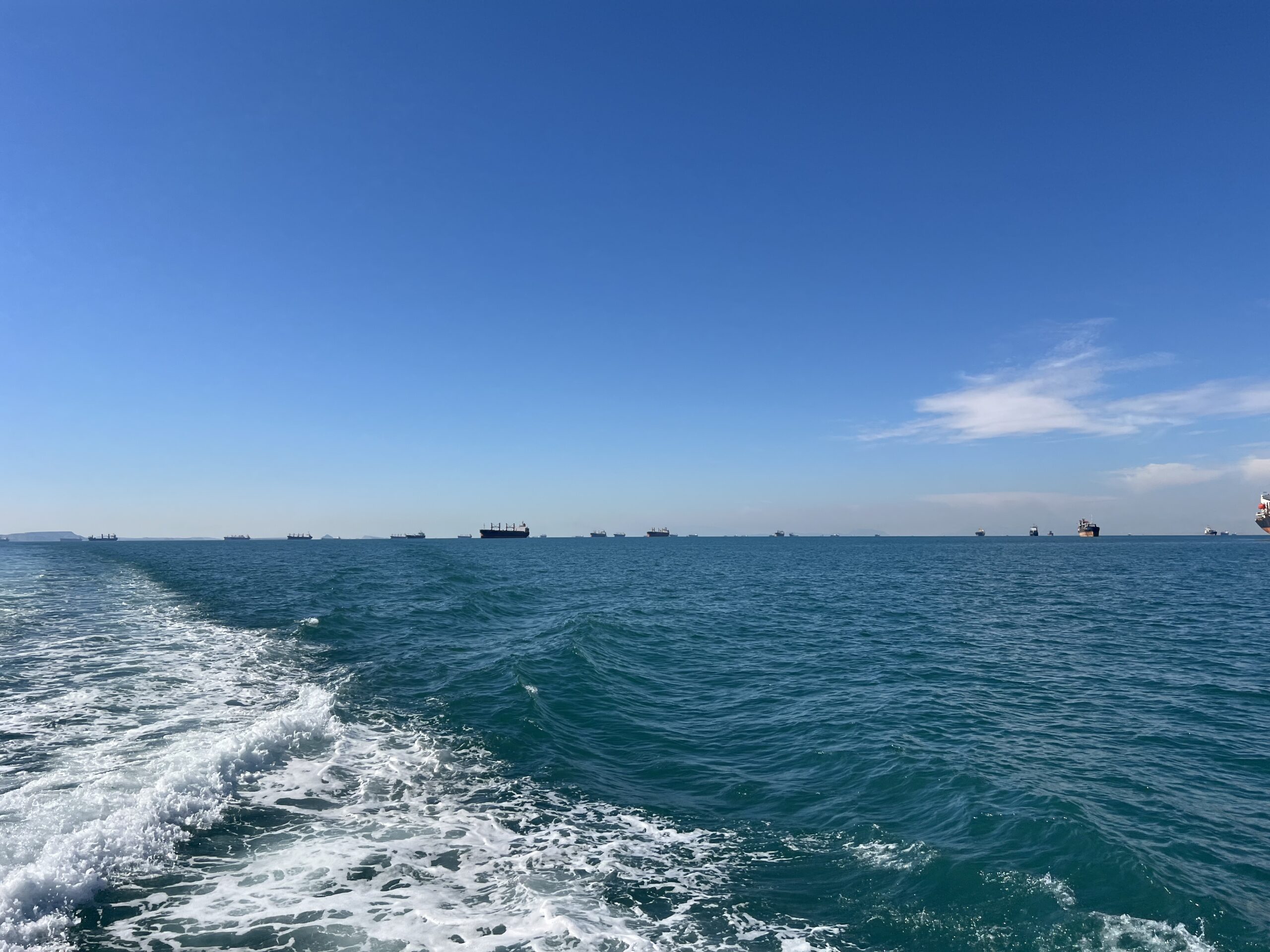
Wide view of the Persian Gulf from a moving cruise ship, showing deep turquoise water with white foamy wake in the foreground and numerous cargo ships spread across the distant horizon beneath a clear blue sky.
On the way to Hormuz Island, passing rows of cargo ships on the open sea.
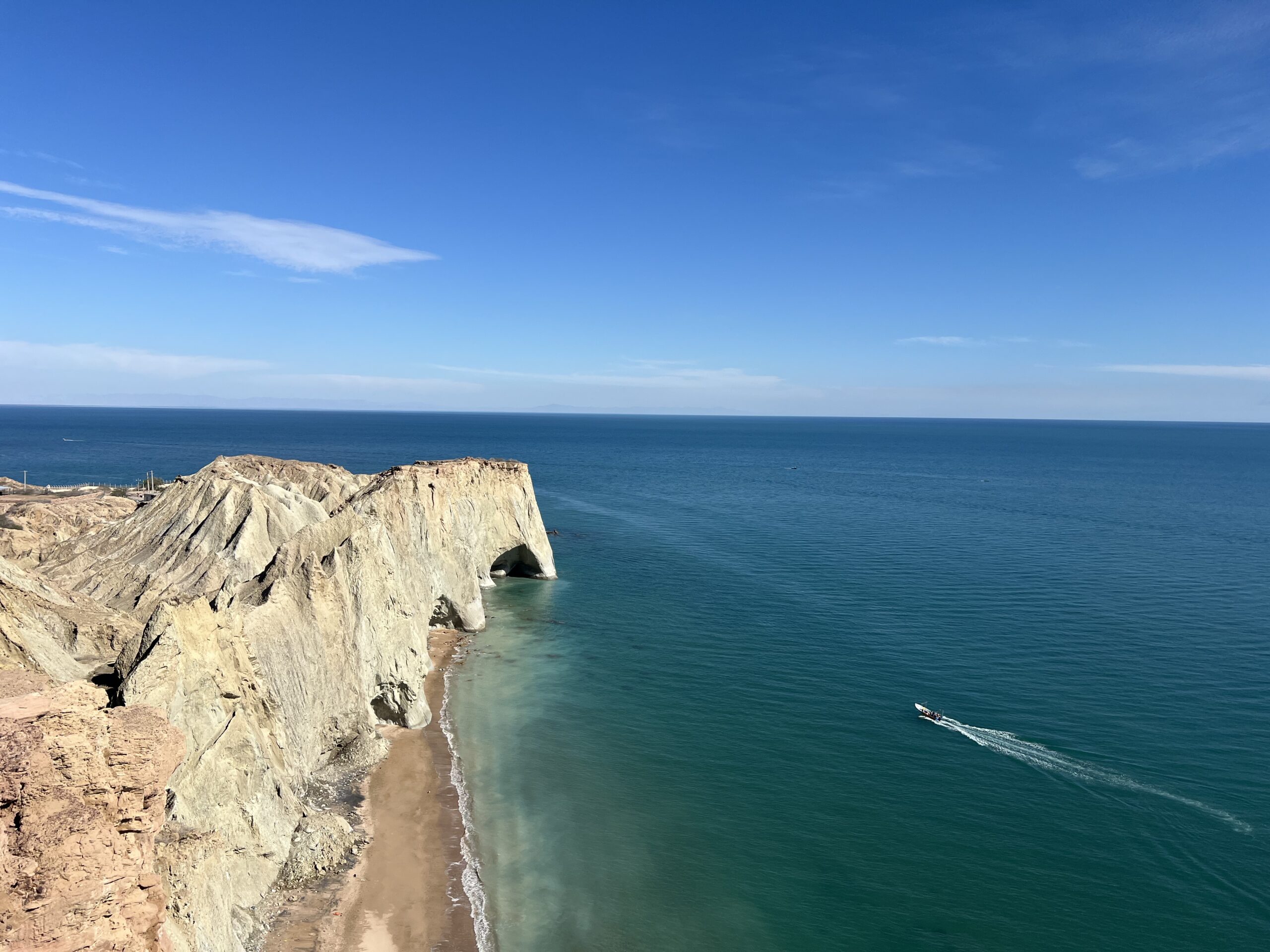
Elevated view of Turtle Beach on Hormuz Island, featuring light-colored rocky cliffs above a narrow sandy beach where sea turtles nest, clear turquoise water along the shoreline, and a small motorboat creating a white wake across the calm blue sea beneath a bright sky.
Turtle Beach on Hormuz Island, where sea turtles come ashore to lay their eggs.
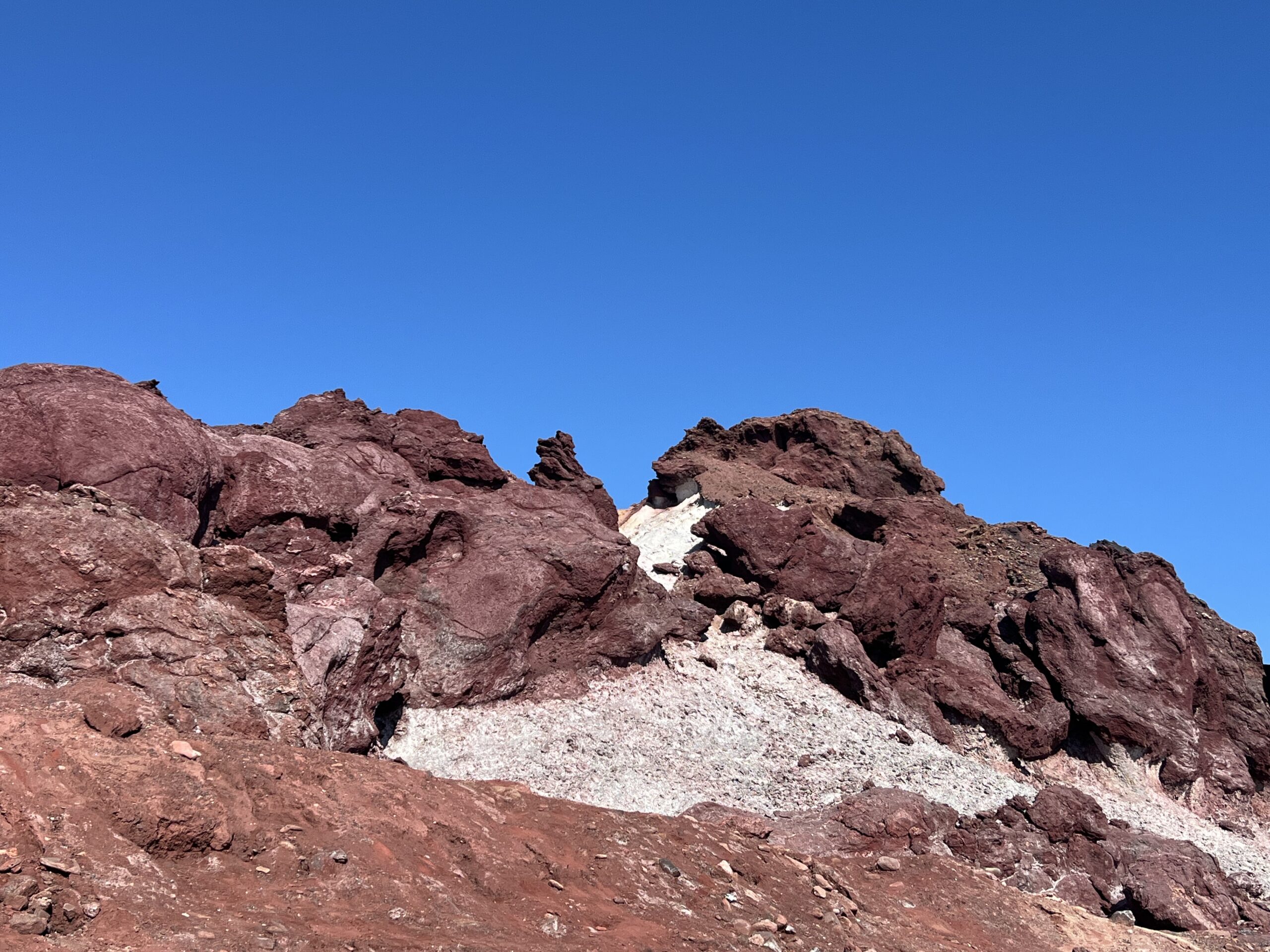
A rocky hill on Hormuz Silver Beach, featuring layers of red and white rocks under a bright blue sky. The terrain is rugged, with jagged rock formations and a mix of deep red and pale, almost white rock scattered across the surface.
A unique rock formation on Hormuz Silver Beach, showcasing vibrant red and white hues. beautiful color mixture in my eye.
Continue reading

Brain rot

I just witnessed something genuinely horrific. The worst case of brain rot I’ve ever seen.

I watched someone try to get through a two-minute video clip and completely fail. They couldn’t sit with it. They sped it up to 2x, skipped ahead a minute, jumped back to catch a “key part,” then hit 2x again. All over a video that barely lasts longer than a song.

It was rough to watch. Not being able to focus for two minutes says a lot about what endless scrolling and short-form videos are doing to people.

So I asked, half joking and half serious, “How do you watch a movie or read a book if you can’t even wait two minutes for this?”

The answer was simple: “I don’t.”

That was it. No explanation, nothing. Honestly, that’s what stuck with me the most. I feel bad for anyone who’s become like this. If you have reached this point, I’m truly upset for you. I hope you can reverse the effect.

The Lord of the Rings

Aside

I finally watched The Lord of the Rings. I can’t believe I waited this long. There are so many amazing movies I haven’t seen, and I am trying to catch up.

It took me four days to finish it, taking 10 hours of my time to fully understand everything and I realized I really need to watch The Hobbit and read the books to get the full story.

No regrets, though. I had a lot of fun, and I am really glad I finally gave it a shot.

Please use social networks

While politicians and ruling powers continue their efforts to restrict social networks and control the free flow of information, it is our responsibility to speak out, share the truth, and defend our right to freedom of speech and expression.

There are people, such as myself, who find social networks mentally overwhelming and choose to avoid them. They are not designed and built for everyone. Still, it doesn’t mean that social networks are inherently bad. Today, social networks are one of the most important platforms for free speech. People expressing their opinion, uncensored, is what makes democracy great.

As governments around the world tighten their grip on the cyberspace, it becomes harder to preserve our anonymity. We must fight to protect our rights. Absolute power always lead us to dictatorship. To safeguard our freedom, resistance is essential.

Using social networks is part of this resistance. The more people speak up, sharing stories of injustice and unfairness, and voicing their opinions without fear, the harder it becomes for any system to silence them.

Organizing rallies and protests isn’t simple. You have to bring together people who care about the same issue, keep things peaceful, respect the rights of others, set the right time and place, and make it big enough that the message actually gets heard. And even with guides on how to attend safely, many people worry about being recognized, which is often reason enough for them to stay away.

Social networks have made things easier. People everywhere can share their opinions and be heard without having to show up at a protest in person. But it’s still not completely safe. Many have faced punishment for what they’ve said online. House raids, lawsuits, and threats simply for speaking out against those in power. And while some believe using a fake name makes them anonymous, the reality is that there are plenty of ways to uncover someone’s true identity.

It’s worth reminding people that while protesting on social networks has value, it doesn’t replace showing up in person. Online speech is still speech, but politicians aren’t nearly as intimidated by posts as they are by physical marches and protests.

We should not take online protest for granted. If it were useless, those in power wouldn’t try so hard to censor it. It remains one of the strongest tools we have today. It spreads free information, gives people access to new knowledge, and helps communities stay informed about the issues that matter to them.

Even though I do not use social networks myself, I encourage others to take part in them. If it ever becomes necessary, I will use them too despite the problems I might face. Nothing is more important than our freedom, and if speaking out on these platforms helps protect it, then being active is not a choice but a duty.

This is especially clear in many Middle Eastern countries where less democratic regimes hold power. Authoritarian governments depend on keeping people uninformed, which makes social networks a direct threat to their survival. That is why they impose heavy censorship and work relentlessly to block the free flow of information in any way they can.

It hardly needs repeating that Jamal Khashoggi, a Saudi journalist, was assassinated inside the Saudi consulate in Turkey. In the MENA region, journalism that serves the people is often treated as a dangerous profession. Dictators understand the power of information, which is why they work so aggressively to control it.

That is why it is important to take back control of your online and digital life. Your presence in cyberspace matters, because every time you show up, you make it harder for those who want to silence you.

Using social networks is important, but what matters even more is staying in control of your data. Dictators are never afraid to use force, silence voices, or treat people unjustly, which is why owning your data is essential. Silo platforms such as Twitter (now X), and Meta (including Facebook, Instagram, etc.) harvest personal information and hand it over to third parties, including governments. That makes protecting your digital life just as critical as speaking out.

Safer social networks such as Mastodon (or more broadly the Fediverse) are better options. But it is still very important to choose your instance carefully, since the server you join shapes your experience and determines how your data is handled. They give you a voice, are designed to respect users freedom and privacy, and they’re free (as in freedom) software.

Freedom was never achieved easily, and the digital age is no exception. Whether through marches through the streets or voices raised online, every single act of resistance matters. Social networks can be powerful tools, but only if we use them wisely and remain in control of our data. The fight for freedom is the fight for our future, and it begins with each of us showing up, speaking out, and refusing to be silenced.

Ups and downs

Life’s got a lot of ups and downs and I learned to deal with them. There has been a lot of pressure on me lately, lots of disappointments. I tried my best to keep my spirits up, show strength, and act strong but sometimes you just need to decompress.

I’d like to listen to my favorite music, watch some National Geographic documentaries, eat food, and read some interesting articles. This fuels me to be able to battle my problems head-on.

I’ve faced setbacks in my life before but I’ve learned that it’s not the end of the world. I always say that everything happens in its own time and I truly believe in it. I don’t sit and upset myself over something I have no control over. I try my best to turn the situation, if I succeed I’ll be happy and if I fail, I know I’ve tried my best.

I don’t worry about the future I’m unaware of. I’ll try my best to plan for upcoming situations but that won’t make me live in constant distress. I want to live, not just be alive. I won’t ruin the moments I can enjoy because I don’t know what will happen to me.

Right now I’m listening to “Walk My Walk” by Breaking Rust, drinking green tea, and getting ready to take a training course on a computer program that I use in my job. I won’t let these ups and downs knock me off my path.

Gilan Province 2

A slightly low-angle photograph of an empty park bench nestled on a small, grassy mound under a large, bare-trunked tree. The bench has a black metal frame and worn wooden slats painted in bright orange and reddish-brown. Fallen autumn leaves litter the ground around the base, and a dirt path leads off to the right. In the blurred background, other trees and an open, rolling field can be seen.
After a ride up the Lahijan Gondola lift in Gilan Province, we found this colorful bench to enjoy a moment of peace and the mountain air.
A stunning panoramic view of a mountain landscape above a thick layer of clouds. The sky is a clear, bright blue near the top, fading to a pale blue-white at the horizon. The slopes in the foreground are covered in deciduous trees, many with bare branches or muted autumn colors like deep gold and brown. A patch of the distant hillside is brightly lit by the sun, contrasting with the shadowed foreground. The vast, flat layer of white clouds fills the valley below, looking like a serene, endless sea.
After an hour of driving to Deylaman.
Passing through clouds and jungles.
A moody, wide shot of a dense, dark green forested hill rising steeply up to meet an overcast, cloudy sky. In the foreground, below the main forest line, there is a distinct band of cultivated tea bushes or low shrubs growing on the slope. The light is diffused, giving the scene a soft, slightly mysterious atmosphere.
My lunch view: The perfect scene of lush tea fields and dense jungle on Lahijan’s Devil Mountain (Sheytan Kuh).